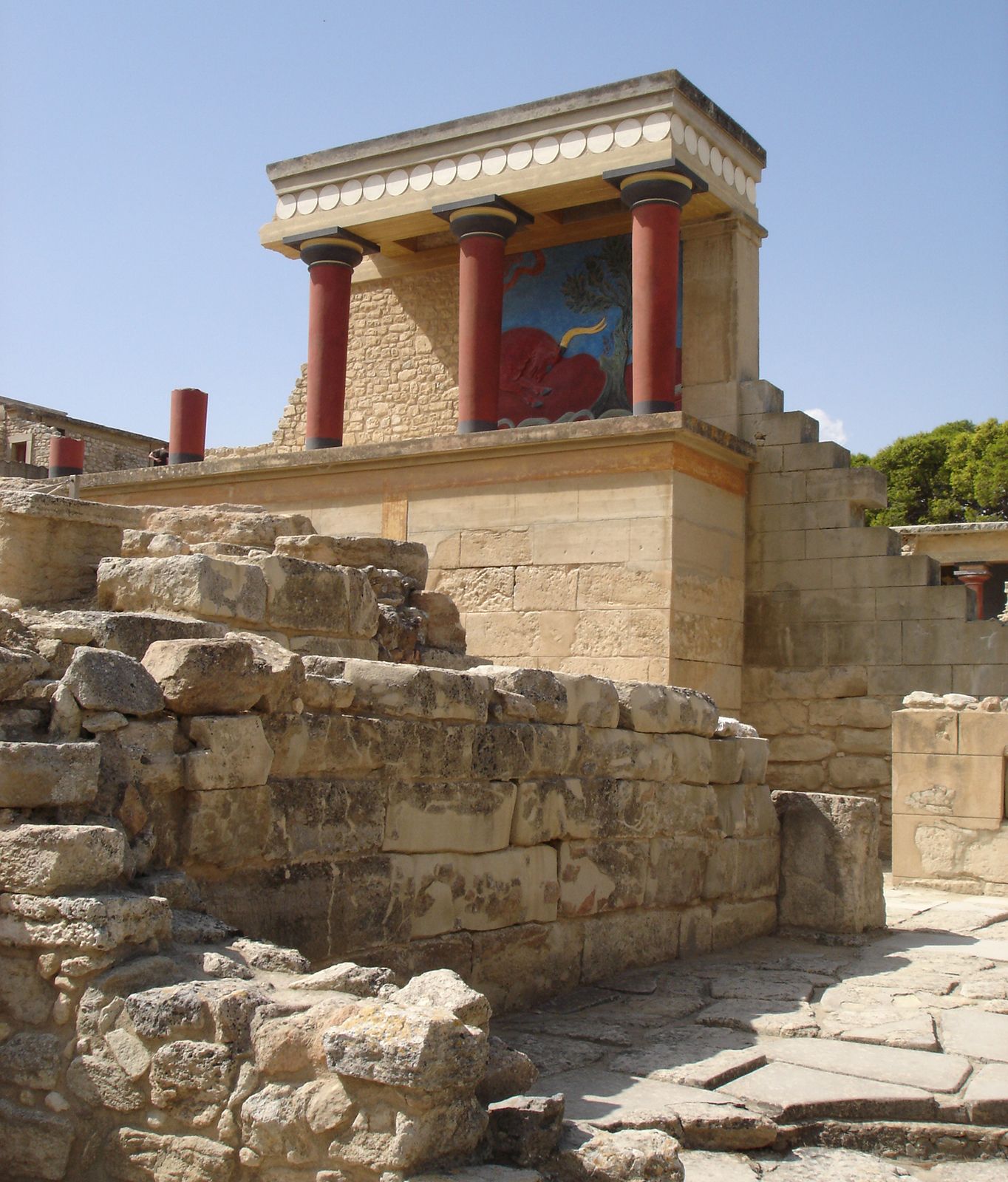
The Palace of Knossos
Discover the iconic Palace of Knossos, a place where history and myth exist in perfect harmony, revealing the grandeur of the Minoan civilization. As the most important center of ancient Crete, the palace stands out for its innovative architecture, light-filled spaces, advanced water systems, and remarkable frescoes whose colors have endured through the centuries.
Wander through its corridors and expansive courtyards, stand before the Throne of King Minos, and imagine the daily life of one of the most sophisticated cultures of the prehistoric Mediterranean. Every corner tells a story — from ceremonies and celebrations to the timeless legends of the Labyrinth and the Minotaur.
Knossos is more than an archaeological site; it is a living journey that carries you thousands of years back to the origins of European civilization, leaving you with a lasting sense of wonder for history and human creativity.
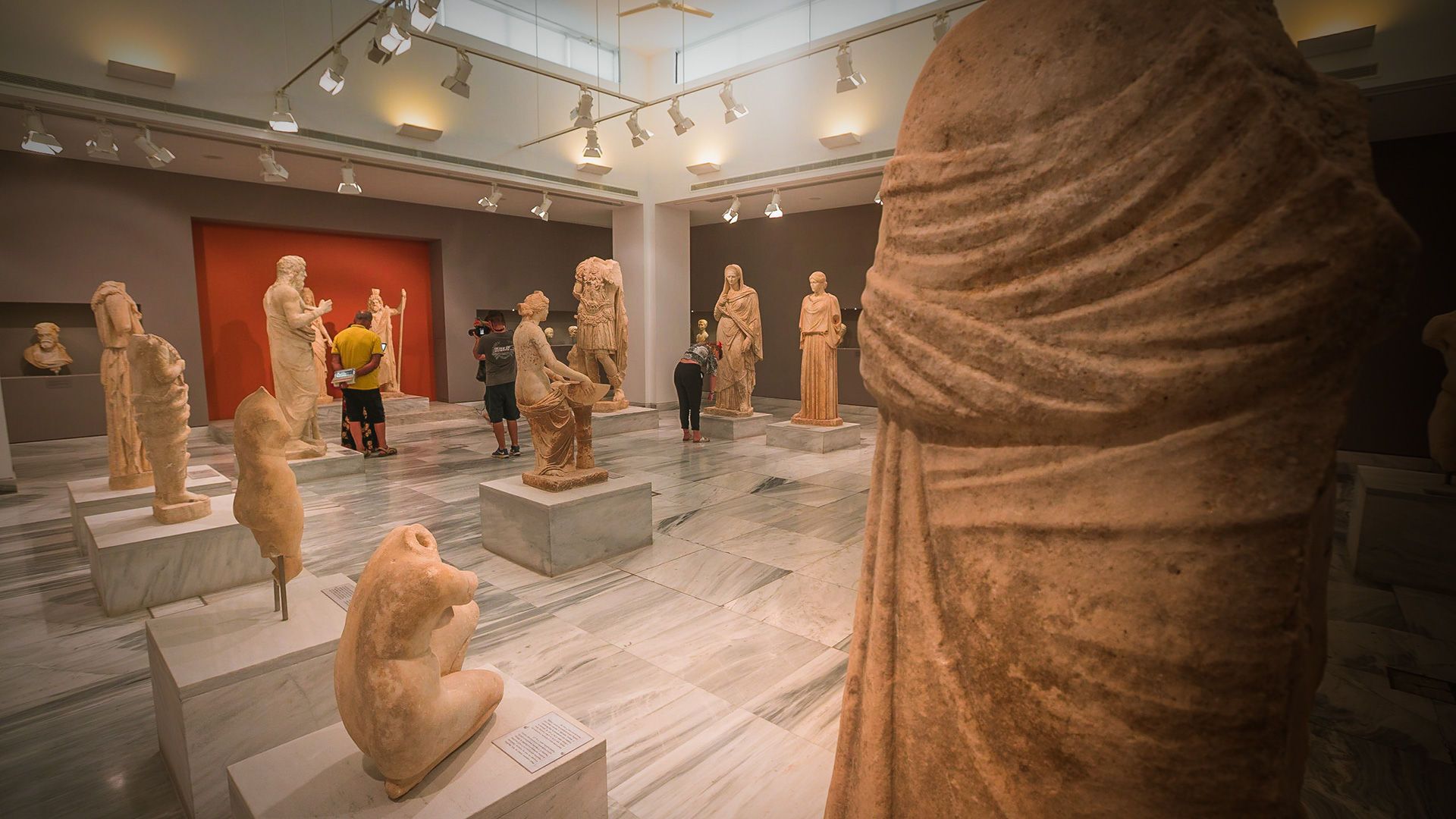
Heraklion Archaeological Museum
If Knossos is the stage, the Heraklion Archaeological Museum is its dazzling treasury. Housed in a distinguished modern building, it preserves the soul of Crete across more than forty centuries, with its Minoan collection shining as its luminous, unparalleled heart. Here, everyday objects transform into art, each telling the story, form, and symbolism of a lost world.
Gaze upon the serene, enigmatic face of the “Snake Goddess,” whose entwined serpents symbolize chthonic power. Admire the Phaistos Disc, with its spiraling symbols forming a sealed poem in clay. The famous bull-leaping frescoes find their home here, capturing a moment of perilous grace. Walking through the museum’s corridors is like whispering with prehistory itself, where a delicate gold bee pendant testifies to extraordinary craftsmanship, and a simple, elegant octopus jar evokes the Minoans’ profound and joyful connection with the sea that cradled their world.
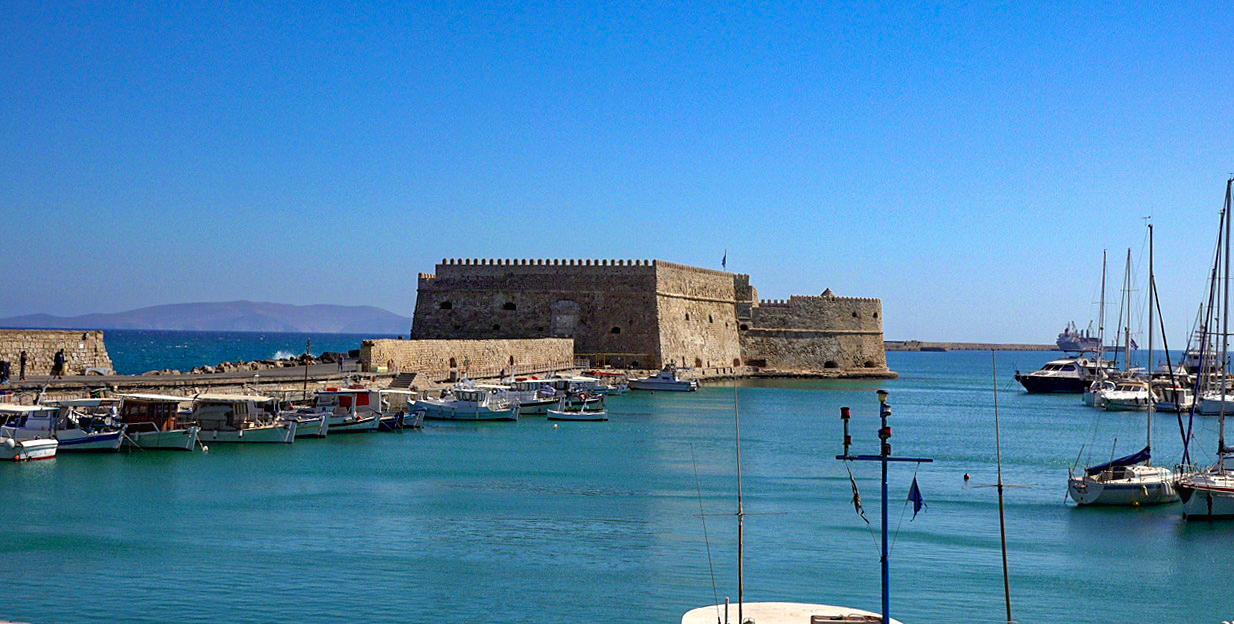
Koules Venetian Fortress
Rising defiantly from the waves at the entrance of Heraklion’s ancient harbor, Koules Fortress stands as a monument to resilience. Built by the Venetians to guard the precious “Kingdom of Candia,” its thick, sea-beaten walls have withstood sieges and the weight of centuries. The proud Lion of Saint Mark watches relentlessly over the main entrance, a silent witness to the succession of empires, naval forces, and humble fishing boats across the ages.
Within its cool, melancholic arches, echoes of guards’ footsteps and the clash of weapons still seem to linger. Climbing to the broad, wind-swept roof rewards visitors with the panorama the builders surely dreamed of: a sweeping embrace of the endless blue Cretan Sea, with the bustling modern city unfurling behind in an amphitheater of life. Standing here is to be at the crossroads of history, at the point where Venice’s martial might met the soul of Crete, creating a sentinel as imposing as it is profoundly romantic, facing the eternal horizon.
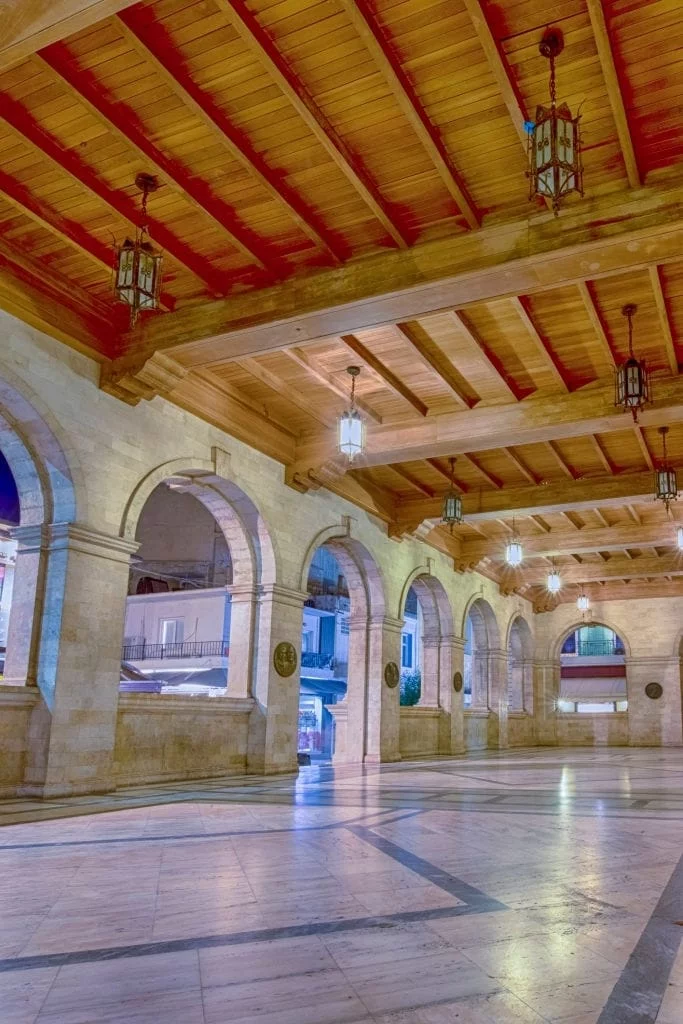
The Loggia (Heraklion City Hall)
In the heart of the city’s bustling markets rests an oasis of Renaissance harmony. La Loggia, once the gathering place of the Venetian aristocracy, now houses the city hall. Its architecture resembles a perfectly balanced melody: a symphony of repeating arches, elegant Doric columns, and clean geometric lines that speak of logic, beauty, and civic pride.
As one of the most well-preserved Venetian buildings in the Mediterranean, La Loggia offers a glimpse into the social soul of a bygone ruling class. Imagine the nobles of the time discussing politics and philosophy beneath these very arcades. Today, its beauty is a public gift, a serene and photogenic corner where the play of light and shadow on pale stone creates a living painting. It stands as proof that even in a city of fierce warriors and ancient myths, there was always room for conversation, art, and cultivated grace.
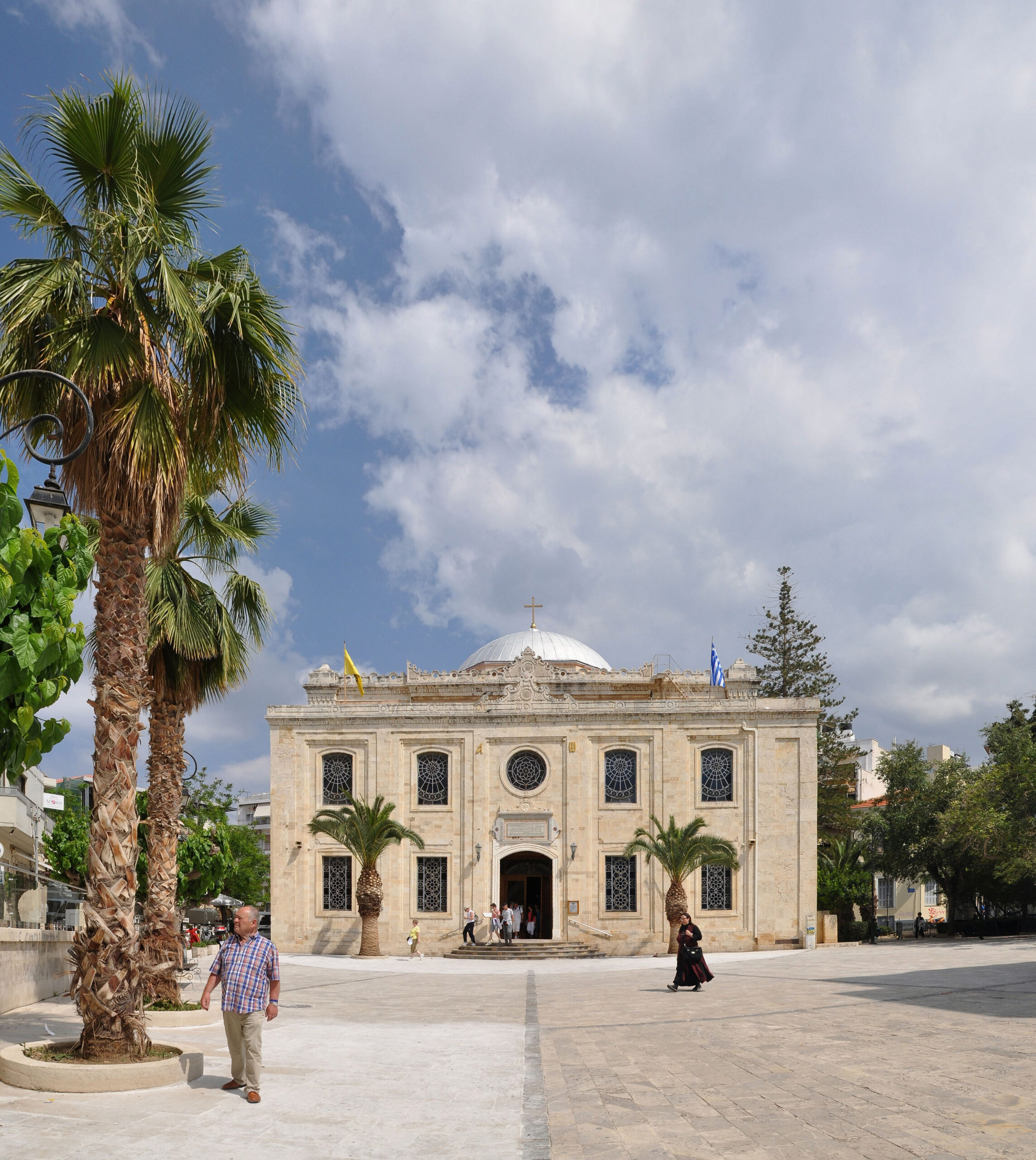
Agios Titos Church
This sacred building is a profound lesson in stone and faith, a living palimpsest of Heraklion’s layered soul. Originally a grand Byzantine cathedral, it was reborn as a Catholic church under the Venetians, then transformed into a serene Ottoman mosque, before finally returning to its Orthodox roots. Each era left its mark, not erasing the past but adding to the spiritual resonance of the place.
Its current form is a beautiful 19th-century basilica that humbly embraces the history it houses. The most treasured relic inside is the honored skull of Saint Titus, the island’s first bishop, a direct connection to the dawn of Christianity in Crete. Visiting Agios Titos is like walking through time in a single, sacred space. It speaks quietly yet powerfully of a city that has worn many masks Byzantine, Venetian, Ottoman, Greek woven together into a unique and timeless tapestry of devotion.